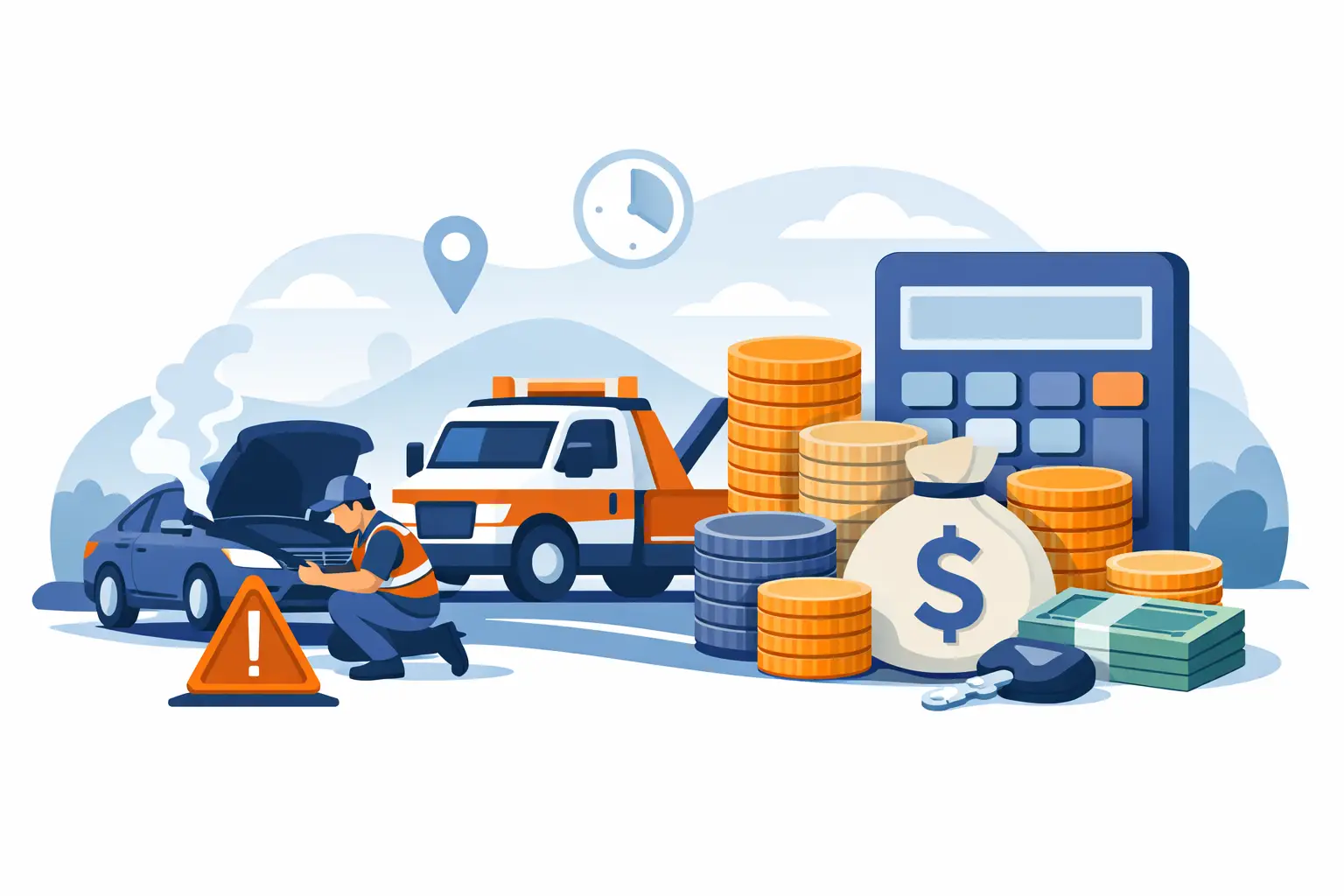
A dead battery at 6:30 a.m. before work feels different than a flat tire in your own driveway. So when drivers ask how much does emergency roadside assistance cost, the honest answer is this: it depends on what happened, where you are, what kind of vehicle you drive, and how quickly you need help.
That said, roadside service should not feel like a mystery. If your car will not start, you are locked out, you ran out of gas, or you need a tow after a breakdown, there are normal price ranges for each type of call. Knowing those ranges helps you avoid surprises and make a faster decision when time matters.
How much does emergency roadside assistance cost for common services?
Most emergency roadside calls fall into a few standard categories. The final price usually reflects the service itself, dispatch time, mileage if a tow is involved, and any added difficulty.
A jump start is often one of the lower-cost roadside calls. In many markets, drivers can expect a basic jump start to land somewhere around $50 to $100. If the battery is buried under panels, the vehicle is in a hard-to-access spot, or the call comes in during overnight hours, the price may be higher.
Lockout service is also commonly priced in that same general range, often around $50 to $120. Simple lockouts tend to stay on the lower end. High-security vehicles, damaged keys, or situations where the vehicle must be opened without risking trim or window damage can push pricing up.
Flat tire help usually runs about $60 to $120 when the spare is available and usable. If the spare is missing, flat, or damaged, the job may turn into mobile tire service or towing instead. That changes the cost quickly.
Fuel delivery is another service that varies. A basic out-of-gas call may cost about $50 to $150, depending on distance and whether the fuel itself is included. Some companies charge for dispatch plus the cost of gas. Others bundle a small amount of fuel into the service fee.
Towing has the widest range. A local tow may start around $75 to $150 for hookup and a short distance, then increase with mileage. In many areas, per-mile towing charges can range from roughly $3 to $8 or more, depending on the vehicle, the truck required, and the route. Medium-duty vehicles, motorcycles, and specialty transports may be priced differently.
Why roadside assistance prices vary so much
The biggest reason pricing changes is that “roadside assistance” covers a lot of different situations. A quick battery jump in a parking lot is not the same as a vehicle stuck in mud off a shoulder, and neither one is the same as a late-night tow after an accident.
Location matters first. If you are close to a provider’s normal service area, the call is usually more straightforward. If you are outside the core route, on a rural road, in heavy traffic, at a construction zone, or somewhere difficult to reach, the dispatch cost can rise.
Time of day matters too. A service call at noon is often easier to schedule than one at 2 a.m. Weekend and holiday calls may also come at a premium because the provider is staffing emergency coverage around the clock.
Vehicle type matters more than many drivers expect. A compact sedan is generally easier to service than a lifted truck, loaded work van, motorcycle, or all-wheel-drive SUV with special towing requirements. If a wheel-lift will not do the job and a flatbed is needed, that can affect the price.
Then there is the condition of the scene. A car sitting safely in a parking lot is one thing. A vehicle in a ditch, pressed against a curb, stuck in soft ground, involved in a collision, or blocked by other cars is another. Recovery work takes more time, more equipment, and more operator skill.
Membership plans vs paying per call
Some drivers carry roadside coverage through an auto club, insurance company, vehicle warranty, or credit card benefit. Others pay only when something goes wrong. Both approaches can make sense.
A membership plan usually spreads the cost out over the year. You may pay an annual fee and get a set number of service calls, mileage limits on towing, or discounted rates on longer trips. That can be a good value if you drive often, have an older vehicle, commute long distances, or want the peace of mind of having coverage already in place.
The trade-off is that coverage is rarely unlimited. Some plans cap how far your vehicle can be towed, exclude certain recoveries, limit service call counts, or reimburse only after you pay out of pocket. Wait times can also vary depending on who is dispatching the local contractor.
Paying per call is simpler. You call when you need help, get a quote based on the actual problem, and pay for the service performed. For drivers who rarely have vehicle trouble, that may be more practical than keeping an annual membership.
If your priority is fast response during a stressful breakdown, direct local dispatch can be the better fit. In an emergency, clear pricing and a company that answers right away often matter more than a benefit card in your wallet.
What should be included in the price?
A trustworthy roadside quote should tell you what you are paying for. That does not always mean an exact dollar amount before the operator sees the vehicle, especially in recovery or accident situations, but it should mean real transparency.
For a basic roadside call, ask whether the quoted amount includes dispatch, labor, standard equipment use, and any minimum service charge. If it is a tow, ask how many miles are included and what the per-mile rate is after that. If it is fuel delivery, ask whether fuel is extra. If it is a tire issue, ask whether the price assumes you already have a working spare.
It is also reasonable to ask what could increase the bill. A professional provider should be able to explain common variables without dancing around the question.
Hidden fees drivers should watch for
Most price frustration happens when drivers hear one number and end up paying another. Sometimes that is because the original description of the problem was incomplete. Sometimes it is because the provider was not clear enough.
Potential add-on charges can include after-hours service, holiday dispatch, extended mileage, winching or recovery time, storage, tolls, specialty equipment, or extra labor. Not every call includes those costs, but any of them can show up depending on the situation.
That does not mean the bill is unfair. It means roadside work is highly situational. The key is to get as much clarity as possible before dispatch and to choose a company that explains pricing in plain terms.
How to keep emergency roadside assistance costs reasonable
The fastest way to avoid overpaying is to describe the problem accurately. Tell the dispatcher whether the car is in a garage, on the shoulder, in mud, after a collision, or missing a wheel. Mention if you drive a large truck, low-clearance car, motorcycle, or commercial van. The more precise you are, the more precise the quote can be.
It also helps to know what service you actually need. If the vehicle simply has a dead battery, a jump start is cheaper than a tow. If the tire can be changed safely with your spare, that is usually less expensive than transporting the whole vehicle. On the other hand, asking for the cheapest option when the vehicle is not safe to drive can cost more later.
If you have roadside coverage through insurance or a membership, check the limits before you call. You may still prefer a local provider for speed, but at least you will know whether any reimbursement is available.
When the cheapest option is not the best option
Price matters, especially when a breakdown was not in the budget. But there is a point where the cheapest quote stops being the best value.
A low price does not help much if no one answers, the truck arrives hours late, or the operator does not have the right equipment for your vehicle. The same goes for accident scenes, highway shoulders, or recovery situations where safety and experience matter more than shaving a few dollars off the bill.
For drivers in the Nashville area, this is where a responsive local company makes a real difference. Fast dispatch, professional handling, and clear pricing can turn a bad roadside moment into a manageable one.
If you are stuck and weighing your options, focus on three things: what service you actually need, what is included in the quoted price, and how fast a qualified operator can get to you. The right roadside help should feel prompt, fair, and steady when your day has already gone off track.
Leave a Reply